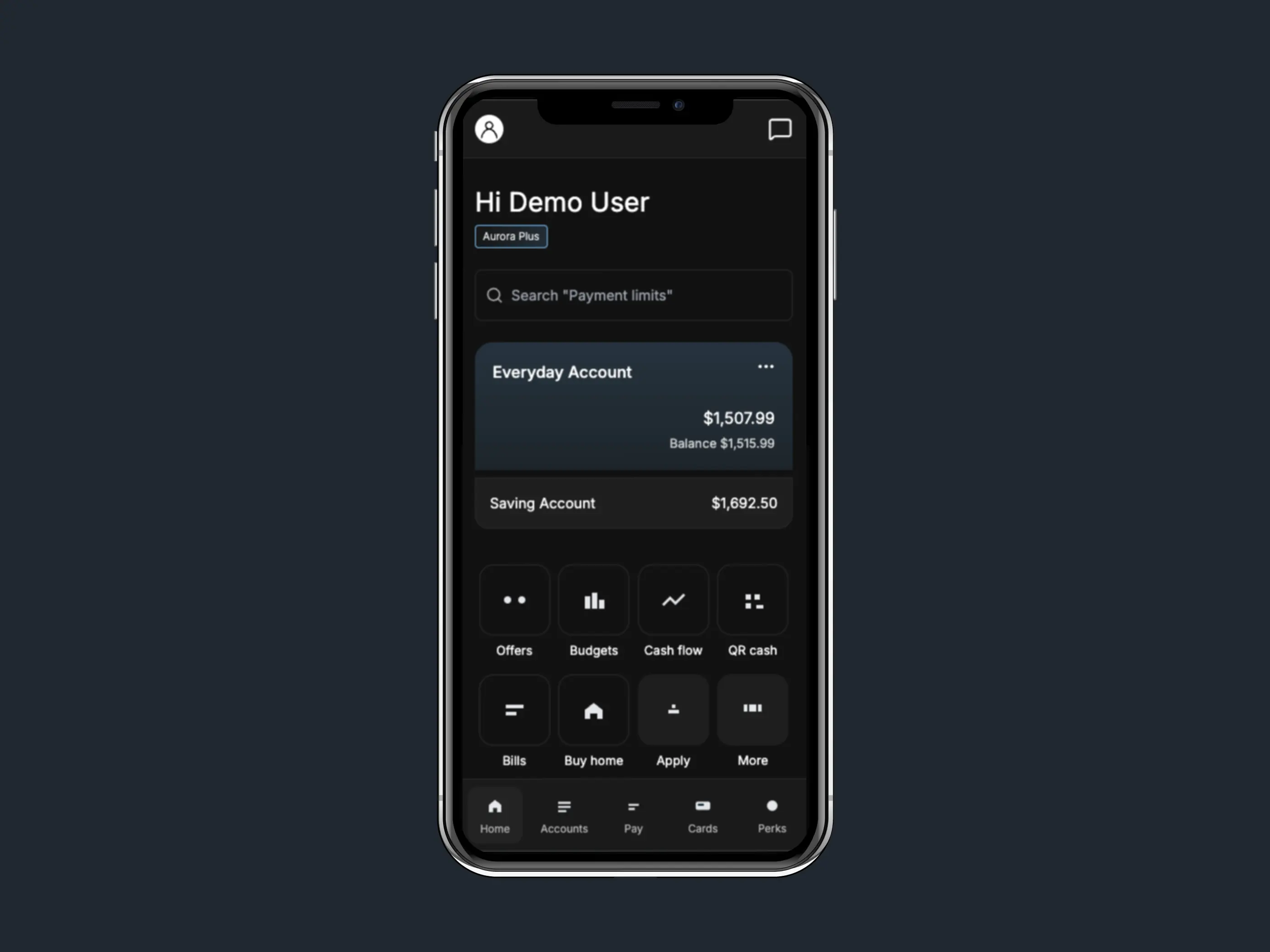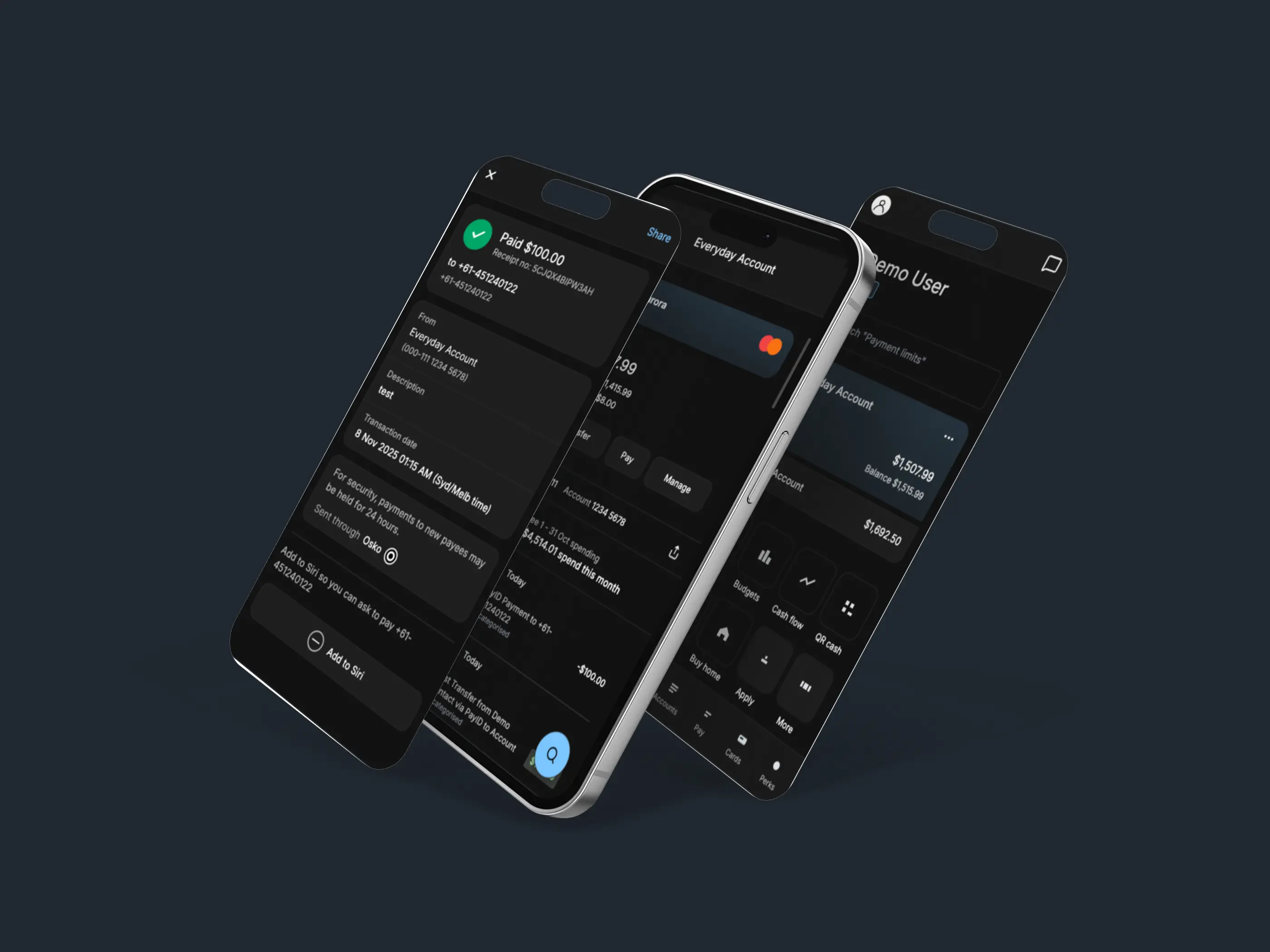
Aurora Bank Mobile Experience
Aurora is a concept mobile banking app built as a PWA. The goal was to make browser-based interactions feel close to native.
Why We Built It
Banking products are unforgiving UX environments. We used this project to stress-test interaction, navigation, and app-state decisions.
- Native-like interactions in React + TypeScript
- Gesture-heavy overlays in a browser shell
- Stable state and persistence without heavy routing libraries
Experience Highlights
- Accounts overview with mock balances and spend summaries
- Card controls including lock, limits, and quick actions
- Payment flows for contacts, PayID, and BSB with receipts
- Gesture-driven sheets with drag thresholds and transitions
- Local demo admin for editing mock data
How It’s Built
Stack
- React 19 + TypeScript with Vite 6.
vite-plugin-pwahandles the service worker, offline cache, and install flow.- Utility CSS relies on custom properties rather than runtime Tailwind.
State & Data
AppContextstores user/accounts/cards/transactions data.- Dashboard totals are derived from transaction state.
- LocalStorage keeps demo sessions persistent.
Navigation & Interaction
- Custom hooks control navigation and overlay interactions.
- Shared gesture logic is reused across flows.
- Scroll locking keeps background screens stable under sheets.
Animation Basics
- Shared animation constants control blur, scale, and velocity.
- Thresholds adapt to viewport size.
Fictional by Design
- Aurora Bank is fictional; synthetic datasets live in
data/mockData.ts. - No real banking credentials, transactions, or customer information are used.
- Visual references nod to Commonwealth Bank but are not affiliated.
- The project exists as a frontend engineering and UX case study.
What We Took Away
- Native-feel browser UX is possible, but interaction details matter.
- PWA install/offline works well with disciplined caching.
- Mock-data-first development sped up modelling and testing.
TL;DR
Aurora is a concept fintech PWA that focuses on polished mobile interactions, realistic payment journeys, and safe mock-data workflows.